Protein aggregation
When bacteria are stressed, they sequester their proteins into aggregates. This sequentially stops different cellular processes, decreasing the cell's energy levels. These low-energy dormant cells can withstand stressors like antibiotic treatment. When the treatment is stopped, the cells can dissolve their aggregates and recover their energy levels, eventually allowing them to regrow (Bollen et al. 2021).
Protein aggregation-linked dormancy, therefore, helps bacteria evade treatment and leads to recalcitrant, chronic infections. To tackle this, we aim to understand the formation and regulation of protein aggregates in stressed E. coli using advanced single-cell techniques (Dewachter et al. 2021, Bollen et al. 2025).
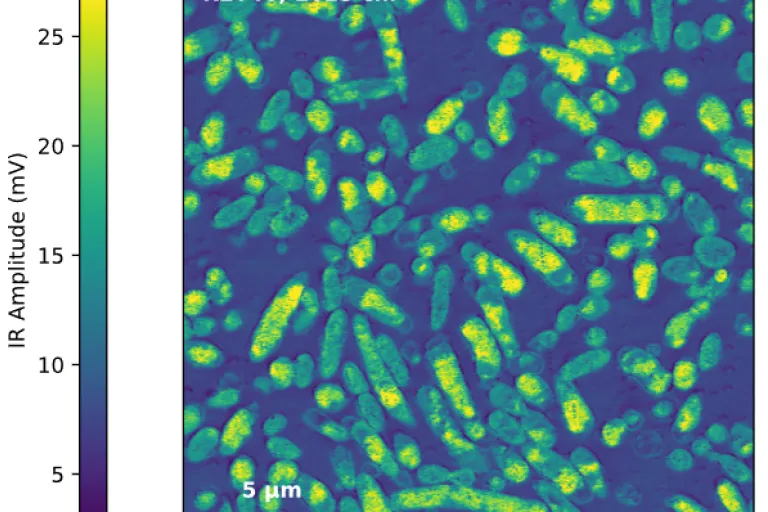
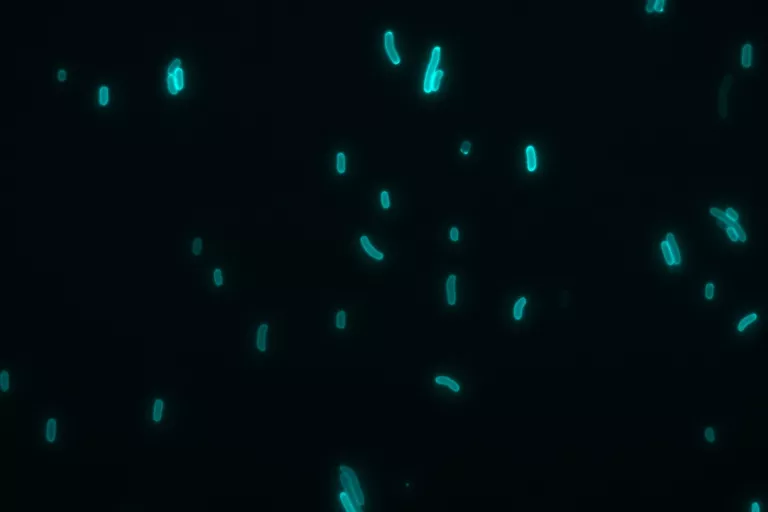
Using GFP-tagged chaperones, e.g. IbpA, we track the formation, solidification and dissolution of protein aggregates in single cells. We also track the relationship between protein aggregation and growth under different stress conditions. Finally, we employ large-scale genome studies to unravel the regulatory mechanisms involved in aggregate formation.
By unravelling the fundamentals of protein aggregation in bacteria, we hope to find new targets that can be used to prevent the resuscitation of treated bacteria.